Back pain is common in teenagers and it can follow them into adult life. What the research says, what to watch for, and when to get it checked in Perth.
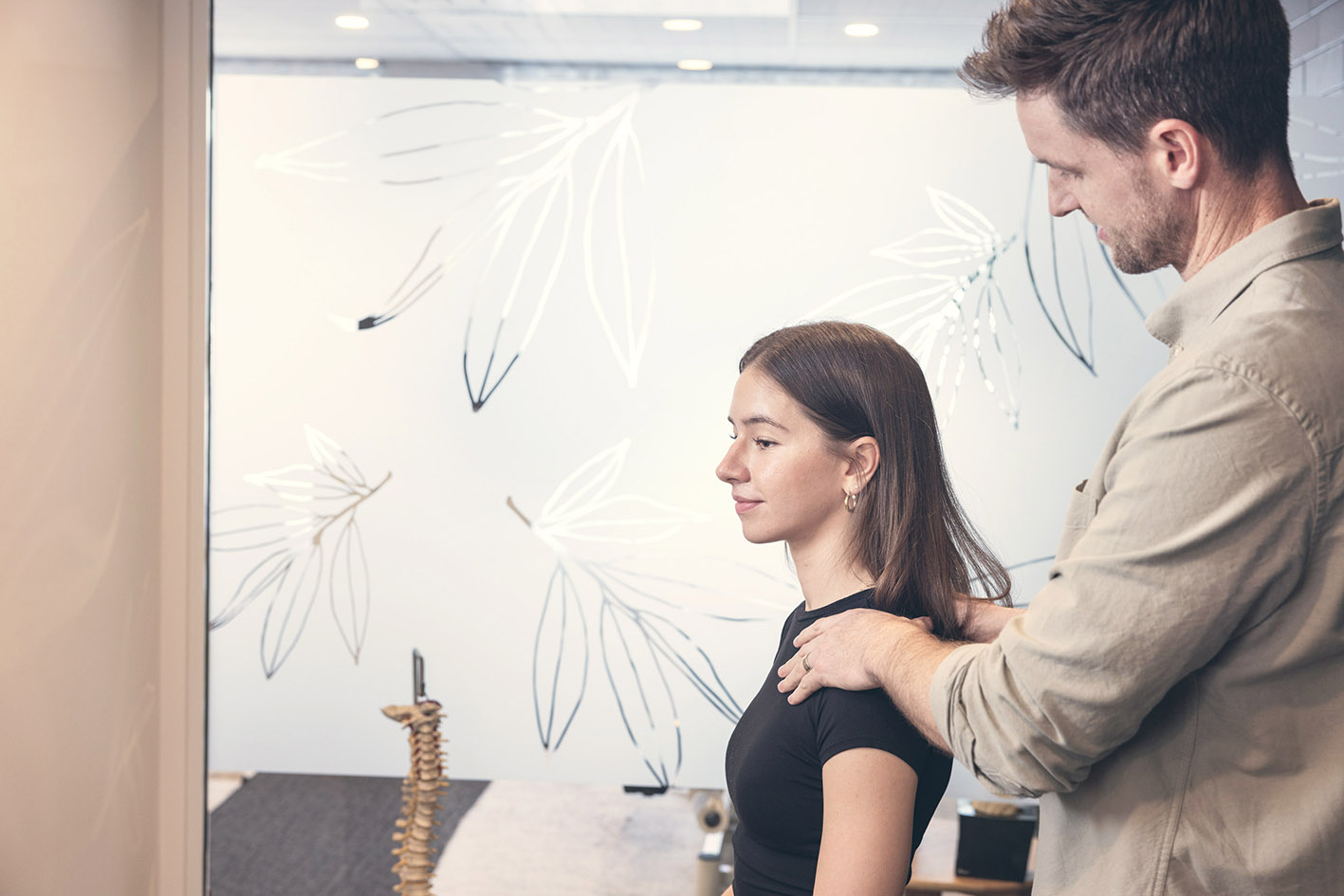
Your teenager mentions their back is sore. Again. They've been hunched over a laptop for exams, or they've just come off a big week of sport. You tell them to stretch, and everyone moves on.
That's a normal response. Most teen back pain settles. But some of it doesn't, and it's worth knowing which is which.
More common than most parents expect.
A meta-analysis of 59 studies looked at low back pain in people aged 18 and under. About 12% had back pain on any given day. About a third had it at some point in the past year. Around 40% had experienced it at some point in their lives so far. Lifetime rates were higher in older teens than in younger kids. (Calvo-Muñoz et al., 2013)
So if your teen has a sore back, they're far from alone. That's reassuring. It also means it's easy to brush off.
Here's the part that's easy to miss.
A Danish study followed almost 10,000 twins for eight years, from adolescence into adulthood. Teens with low back pain were more likely to have back pain as adults. The more days of pain they had as teenagers, the higher the risk later on. Of those who had more than 30 days of back pain in a year as teens, 26% still had more than 30 days of it eight years later. For everyone else, that figure was 9%. (Hestbaek et al., 2006)
That doesn't mean every sore back at 15 turns into a sore back at 40. It does mean that pain which keeps coming back in the teen years is a pattern worth noticing.
Most of us wait until something stops us before we act. A teen can't sit through a class. They pull out of a game. They're lying on the floor after school. By then the pattern has often been building for months.
No pain isn't the same as no problem. And a little bit of pain, most weeks, isn't nothing.
This is the question we hear most from parents.
It makes sense to blame the bag. They're heavy, and kids carry them every day. But the research doesn't back that up. A systematic review of 69 studies, with more than 72,000 children and teens, found no convincing evidence that schoolbag weight, design or the way it's carried increases the risk of back pain. (Yamato et al., 2018)
So by all means get a bag that fits well and sits comfortably. Just don't assume the bag is the whole story. If the pain keeps coming back, it's worth looking further.
The research on teen back pain is still thin. A review of trials in children and teens found that supervised exercise programs reduced average pain compared with no treatment. The trials were small and at high risk of bias, so it's an early signal rather than a firm answer. The same review found that back education programs on their own didn't reduce how many young people had back pain. (Michaleff et al., 2014)
What that suggests is simple. Telling teens how to sit isn't enough. Getting them moving, and building strength they can use, matters more.
A few things that are easy to start at home:
See your GP straight away if your teen's back pain comes with fever, unexplained weight loss, night pain that doesn't ease with rest, numbness or weakness in the legs, or changes to bladder or bowel control. Pain after a fall or a hard knock should also be checked promptly.
For the more everyday kind of back pain, a check is worth booking if:
That last one matters. Teens are good at getting used to things. If they've stopped mentioning it because "it's always a bit sore", that's a reason to look, not a reason to relax.
Our team includes chiropractors with an interest in family care, and we see a lot of teens, often alongside their parents.
A first visit starts with a conversation. We want to know what your teen does in a normal week: school, study, sport, screens, sleep routine and how they feel at the end of the day. Then we do a thorough examination of how they move and how their spine and nervous system are working.
On the second visit we explain what we found, in plain English, to both of you. If we think care can help, we'll talk through a plan and how we'll measure progress. If something needs a GP or imaging, we'll tell you and point you in the right direction.
Teens tend to do best when they understand what's going on. We take the time to explain it to them directly, not just to Mum or Dad.
One appointment rarely changes a pattern that's been building for months. Chiropractic is a process, not an event. The same goes for the habits that sit around it: movement, strength and breaking up long hours of sitting.
The goal isn't just a back that stops hurting this week. It's a teenager who moves well, keeps doing the things they love, and heads into adult life without a sore back as their normal.
If your teen's back keeps telling you something, it's worth listening early. Book a first visit online or call us on (08) 6280 1210.
Feel more you.
Wild Chiropractic is a nervous system-led chiropractic practice in Shenton Park, Perth.